


Therapeutic Technology
Our hospital provides leading-edge technology – as well as therapists trained to use it best – to ensure our patients are positioned to recover as quickly as possible.
Innovative Solutions for Superior Outcomes
New technology continues to push the boundaries of what was once considered full recovery from certain injuries or conditions. Today, for instance, top inpatient rehabilitation facilities deploy robotic tools that give stroke patients the ability to use their upper extremities again or help spinal cord injury patients with early ambulation.
UW Health Rehabilitation Hospital provides leading-edge technology – as well as therapists trained to use it best – to ensure our patients are positioned to recover as quickly as possible.
Here are some examples of some of the industry’s best technology deployed at our hospital:
Lifeglov
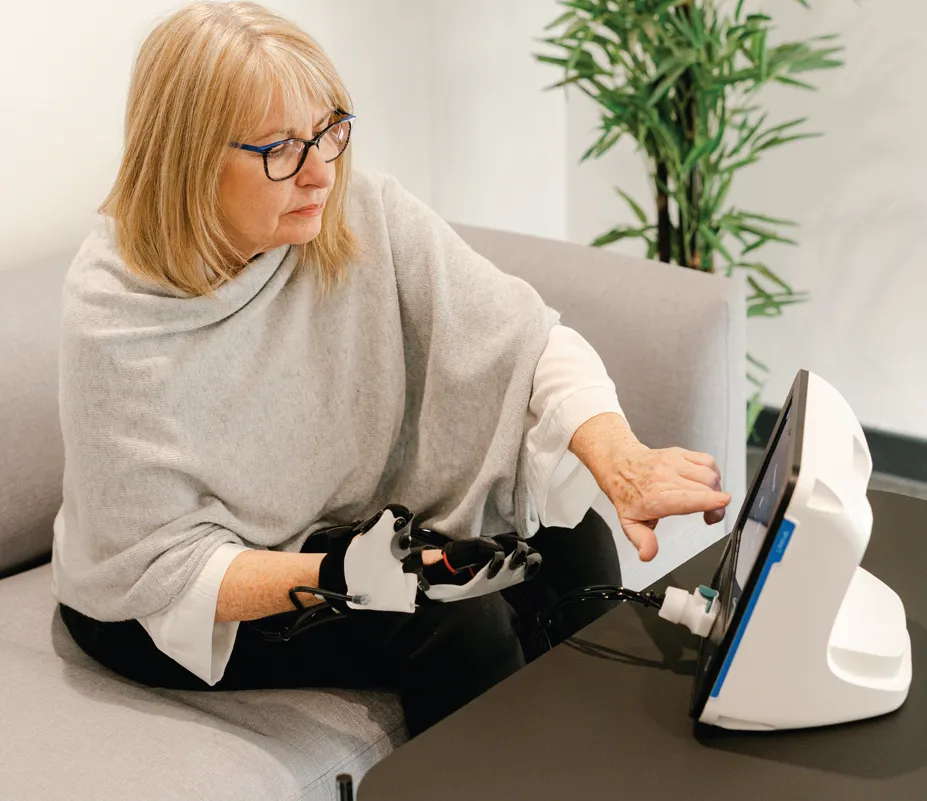
Lifeglov, which is designed to restore independence and regain maximum mobility, assists with hand and arm impairments due to stroke or other neurological illnesses. Powered by air and accompanied by a digital therapy platform, Lifeglov slowly extends the users’ fingers and opens their hands. Wearing the glove, patients engage in high-dose, repetitive task practice through interactive, game-based exercises — an approach designed to promote neuroplasticity and restore movement. Acting as both a passive and active device, it can either facilitate movement independently or provide assistance to complete specific motions, maximizing each patient’s recovery potential.
LiteGait®
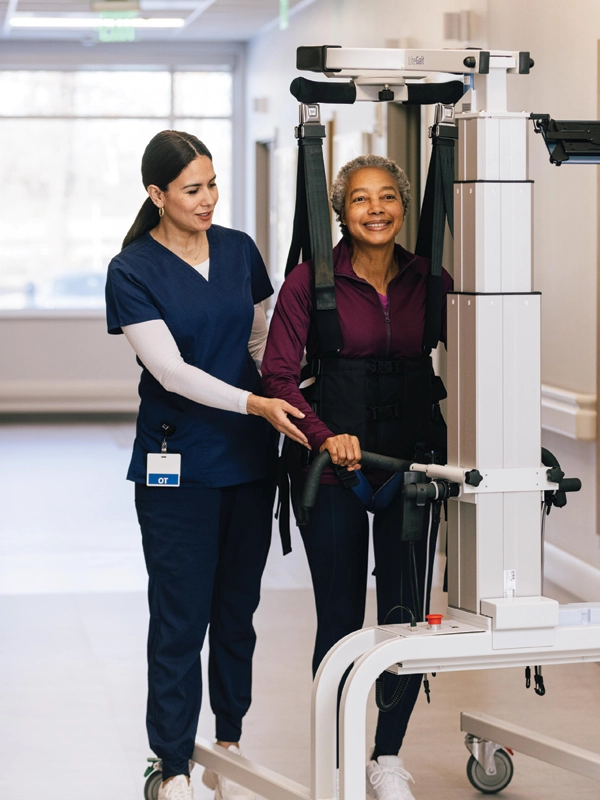
LiteGait® is a body weight support system and gait training device that provides a safe environment for patients to participate in gait training over a treadmill or over ground. This system allows patients to begin gait training earlier in the rehabilitation process than would be feasible with any other assistive device. The LiteGait system eliminates the fear of falling and/or loss of balance with standing and walking tasks, and allows the therapist to provide manual assistance to facilitate proper gait patterns.
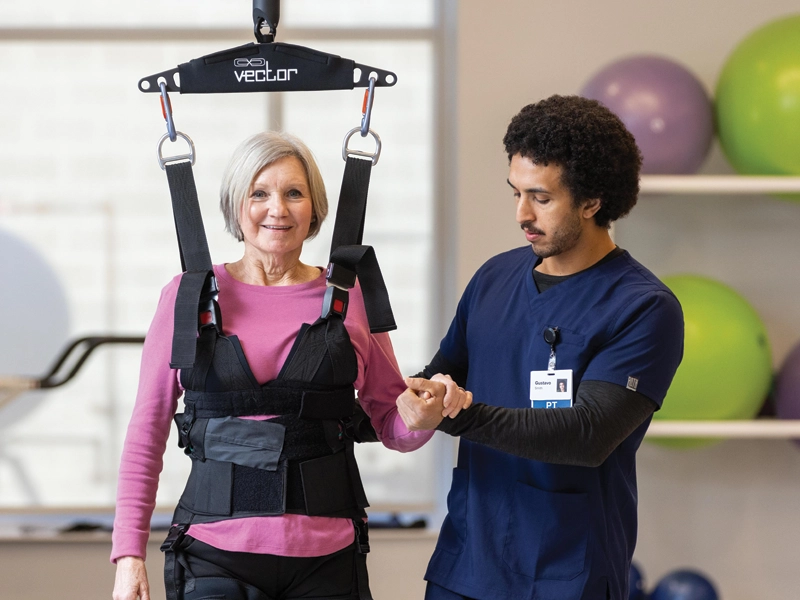
Overhead Body Weight Support System
Our overhead body weight support system is a ceiling-mounted harness that automatically adjusts to a patient’s center of gravity during movement. It allows patients to safely experience a fall and recovery, helping them build comfort and confidence while performing a variety of activities with consistent body-weight support. This also enables therapists to concentrate on movement quality and overall mobility. The system supports patients across a wide range of mobility levels and can be used to treat conditions such as stroke, brain injury, spinal cord injury, Parkinson’s disease, and orthopedic injuries.
InMotionARM™ Robot
The InMotionARM™ Robot is often used with many patients who suffer from weakness in their upper extremities after a stroke. The ARM Robot helps patients utilize their strength to complete hundreds of repetitions in a fraction of the time of traditional exercise. Repetition is one of the most important factors when considering neuroplasticity and the brain’s ability to repair and relearn movements following a stroke. This evidence-based neurorehabilitation technology quietly monitors the patient’s movements during therapy while gently assisting where needed to help them complete various motor therapy activities.
Ekso
The Ekso exoskeletal unit assists patients with early ambulation following a stroke or spinal cord injury. Ekso is a robotic exoskeleton that can be fitted to most patients to allow them to stand and ambulate early in the rehab process, which is key to their long-term prognosis. Clinical evidence indicates that gait training in the Ekso improves patients’ balance, walking distance, and gait speed outside of the device at discharge compared to admission.
